
Reducing delivery costs through better driver scheduling
UX Lead — responsible for the end-to-end UX process.
Android driver app
Reduce Cost Per Delivery (CPD) by improving driver supply management.
The driver shift booking feature is still used today through Orderin’s partnerships with Pick n Pay and McDonald’s.
Orderin had hundreds of active drivers, but poor scheduling created major inefficiencies:
The business proposed a shift booking system to control driver supply — but the initial prototype was difficult for drivers to understand.
My role was to redesign the experience so that drivers could quickly understand, book, and manage their shifts.
Before design involvement, a working prototype had already been developed and tested with drivers.
While the concept worked operationally, the experience had several problems:
These issues created friction and risked low driver adoption.
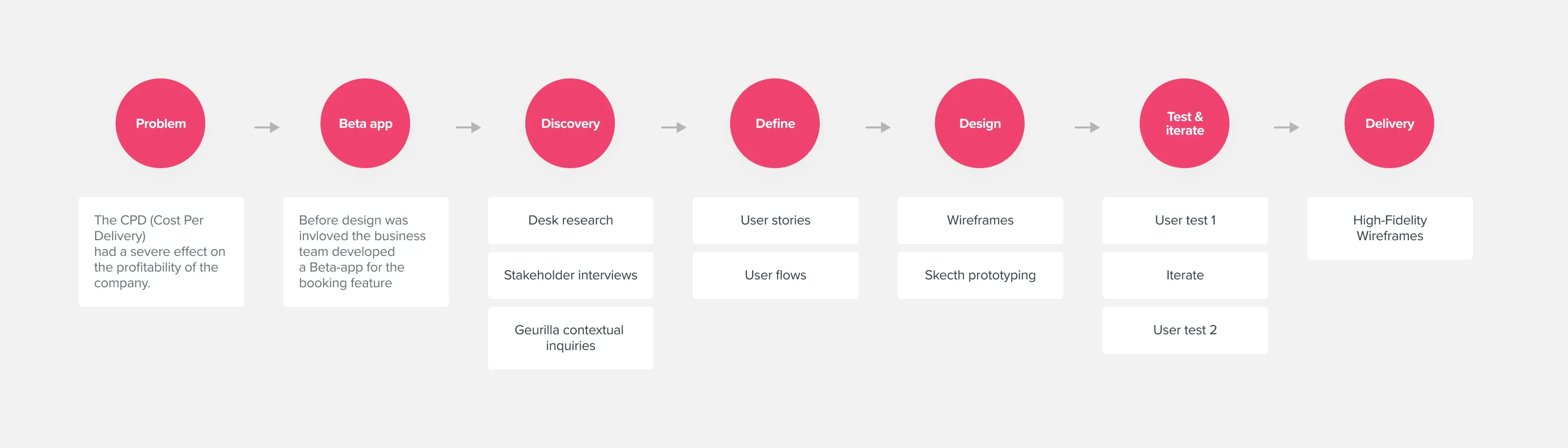
To understand the problem space, I conducted a lightweight discovery phase.
Reviewed competitor platforms including:
This helped identify common patterns for driver scheduling and performance tracking.
Aligned with business stakeholders to understand:
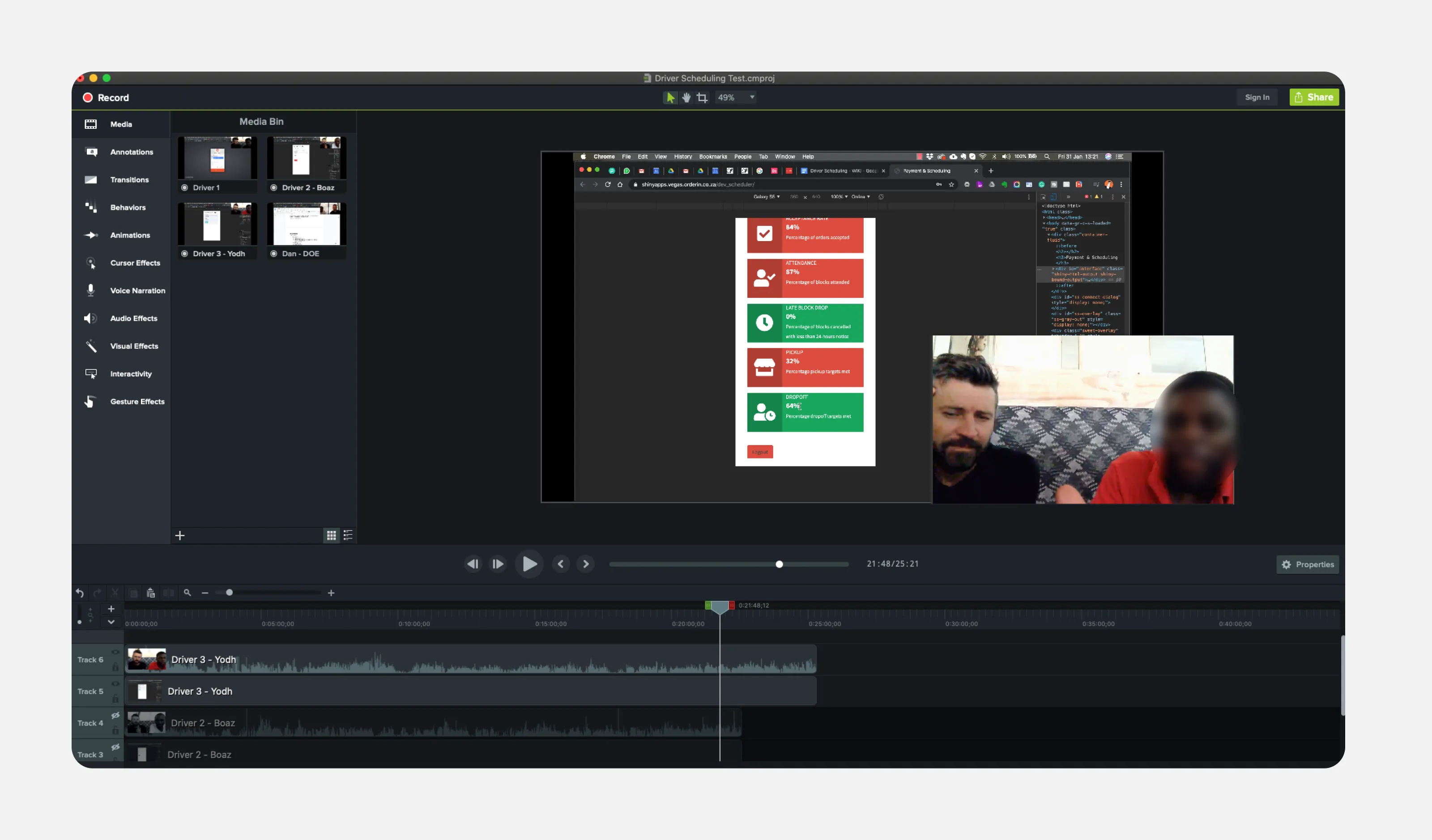
Using the beta prototype, I conducted quick usability tests with drivers to evaluate:
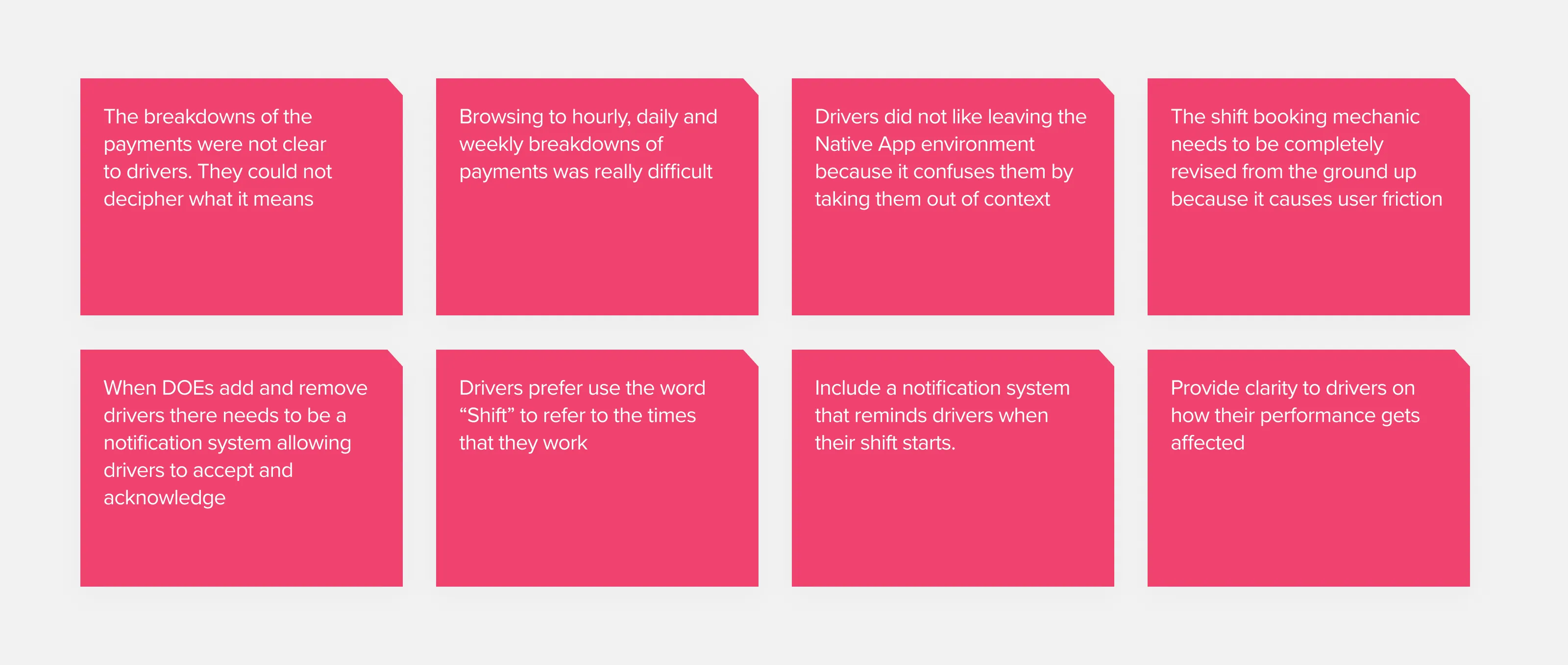
Research revealed several critical issues:
The system failed to communicate how earnings were calculated.
The system failed to communicate how earnings were calculated.
The interaction required a complete redesign..
Drivers preferred the word “shift” instead of “time slot.”
Notifications and performance clarity were essential.
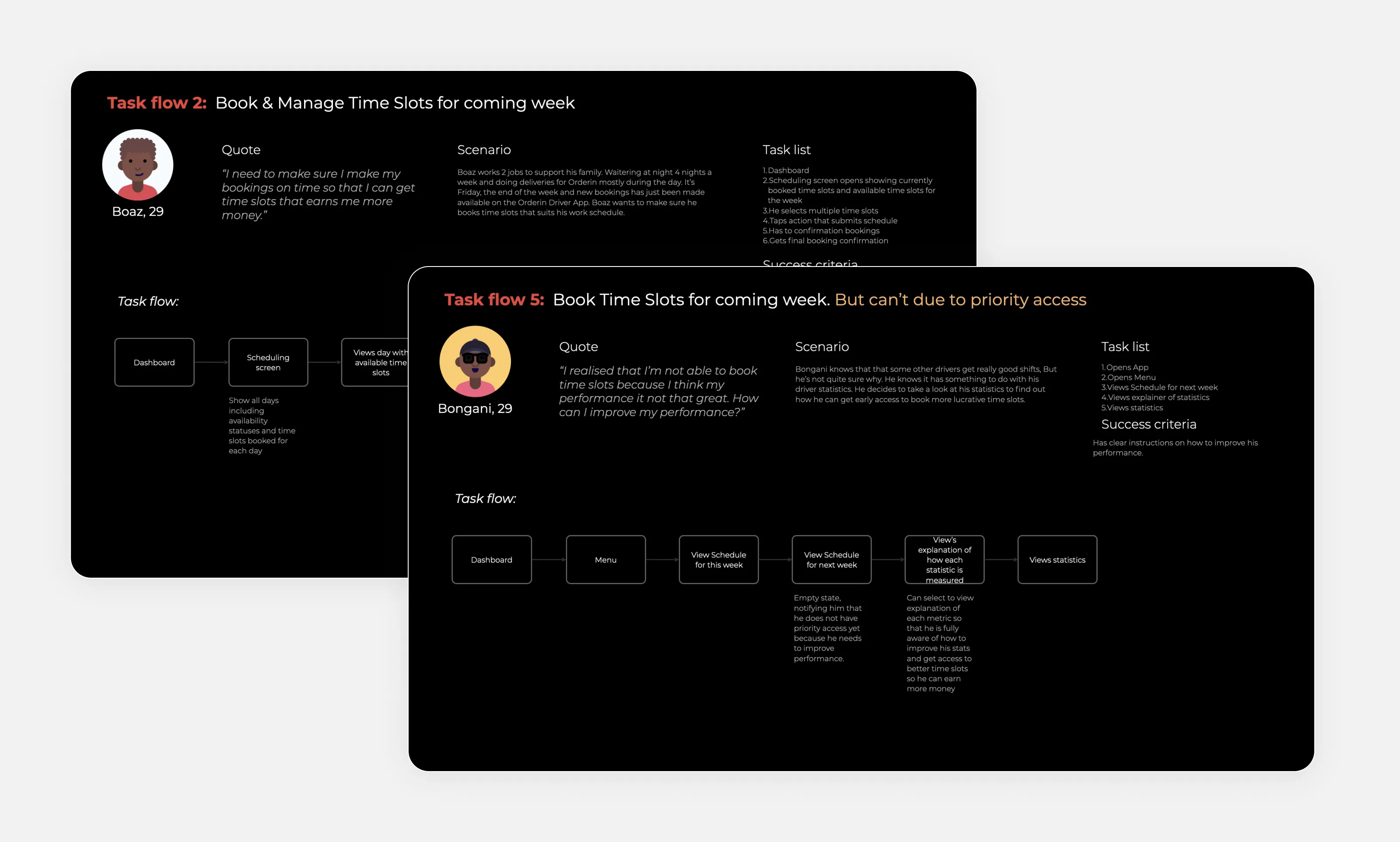
Based on research insights, I defined several core user needs.
Drivers needed to:
These needs were translated into user stories and task flows that guided the design
I followed a lean UX approach, rapidly producing concepts that could be tested quickly.
The design focused on three principles:
Drivers should instantly understand shift availability.
Booking a shift should require minimal interaction.
Drivers should clearly understand their schedule and hours.
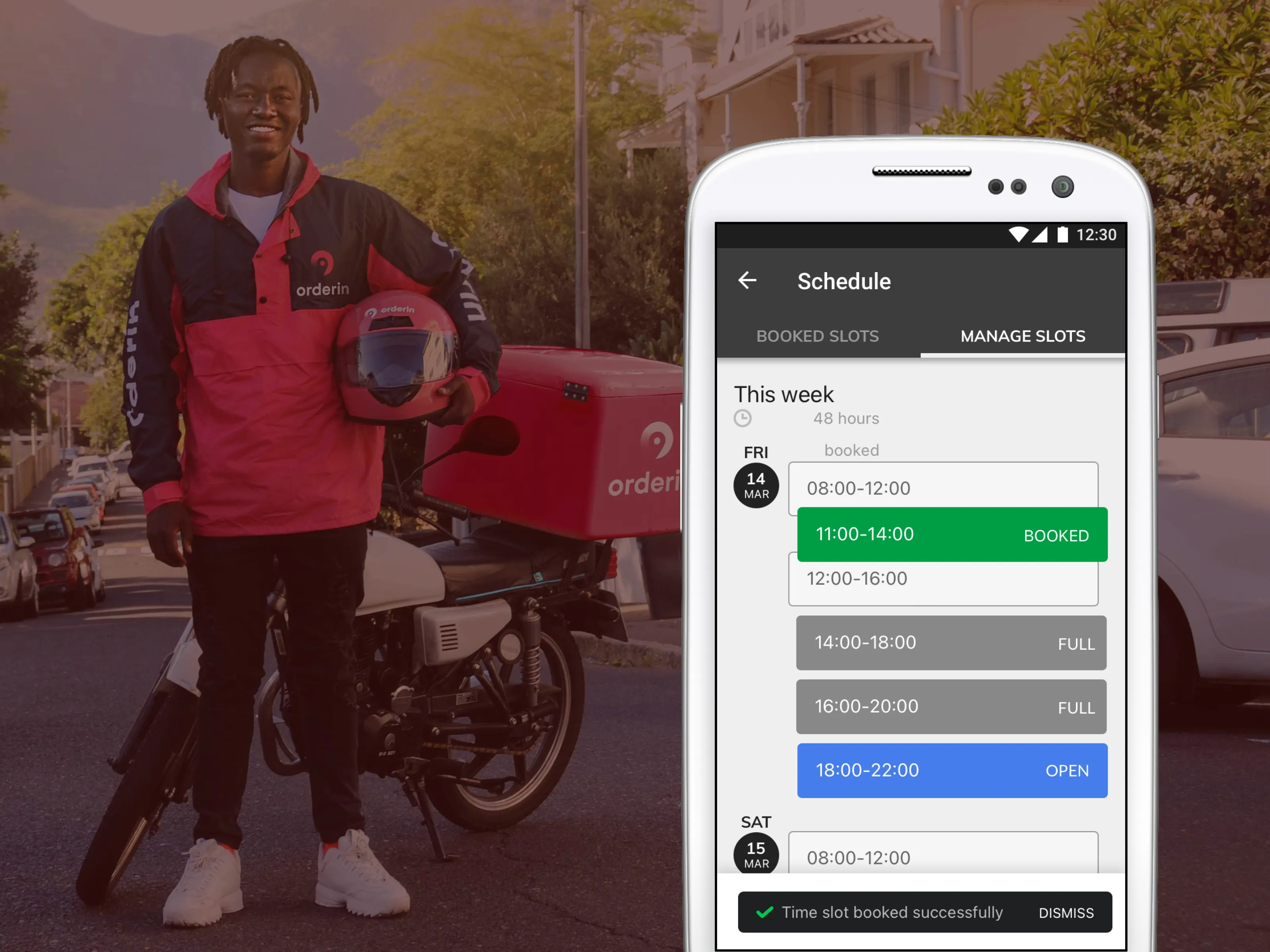
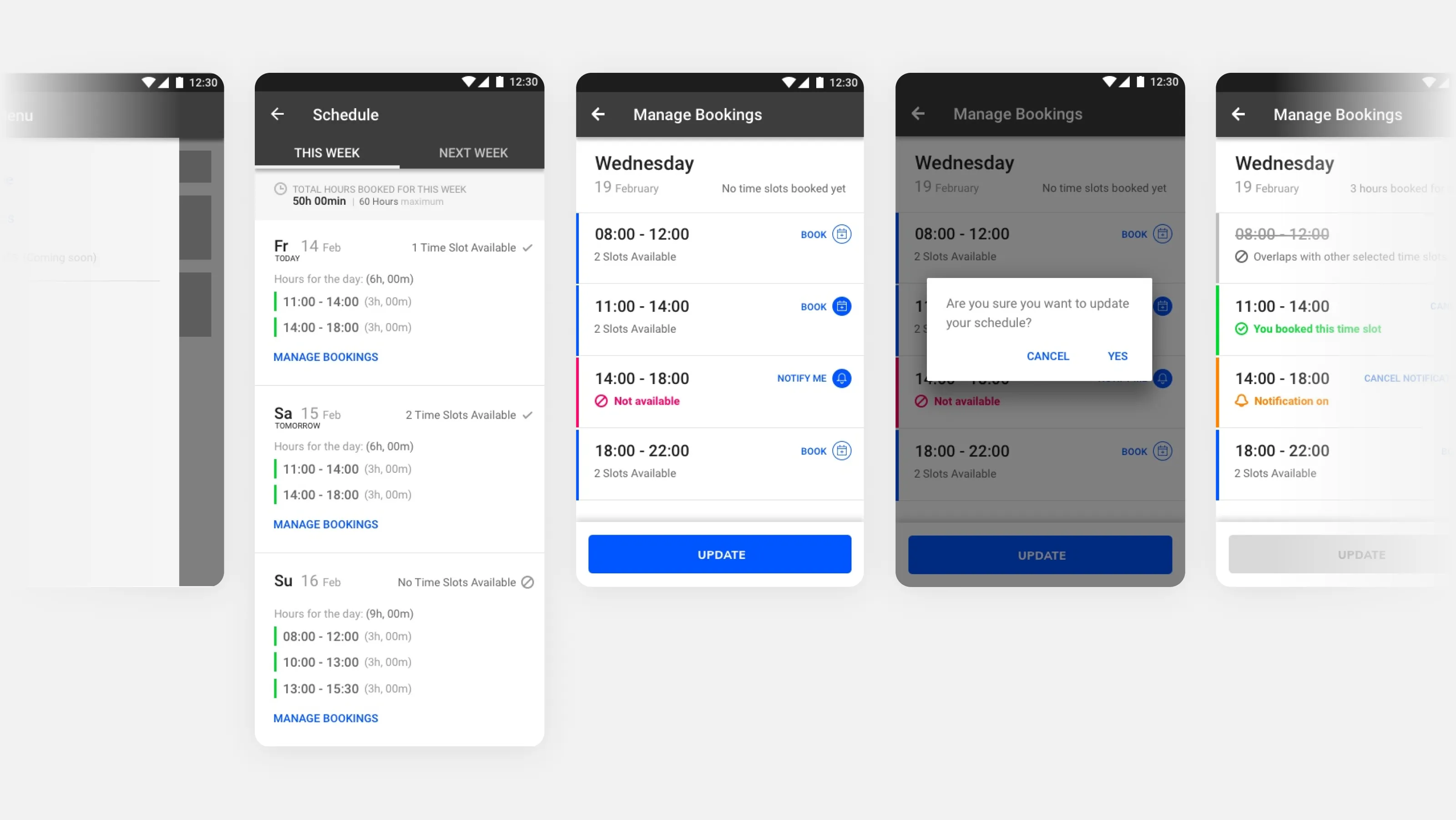
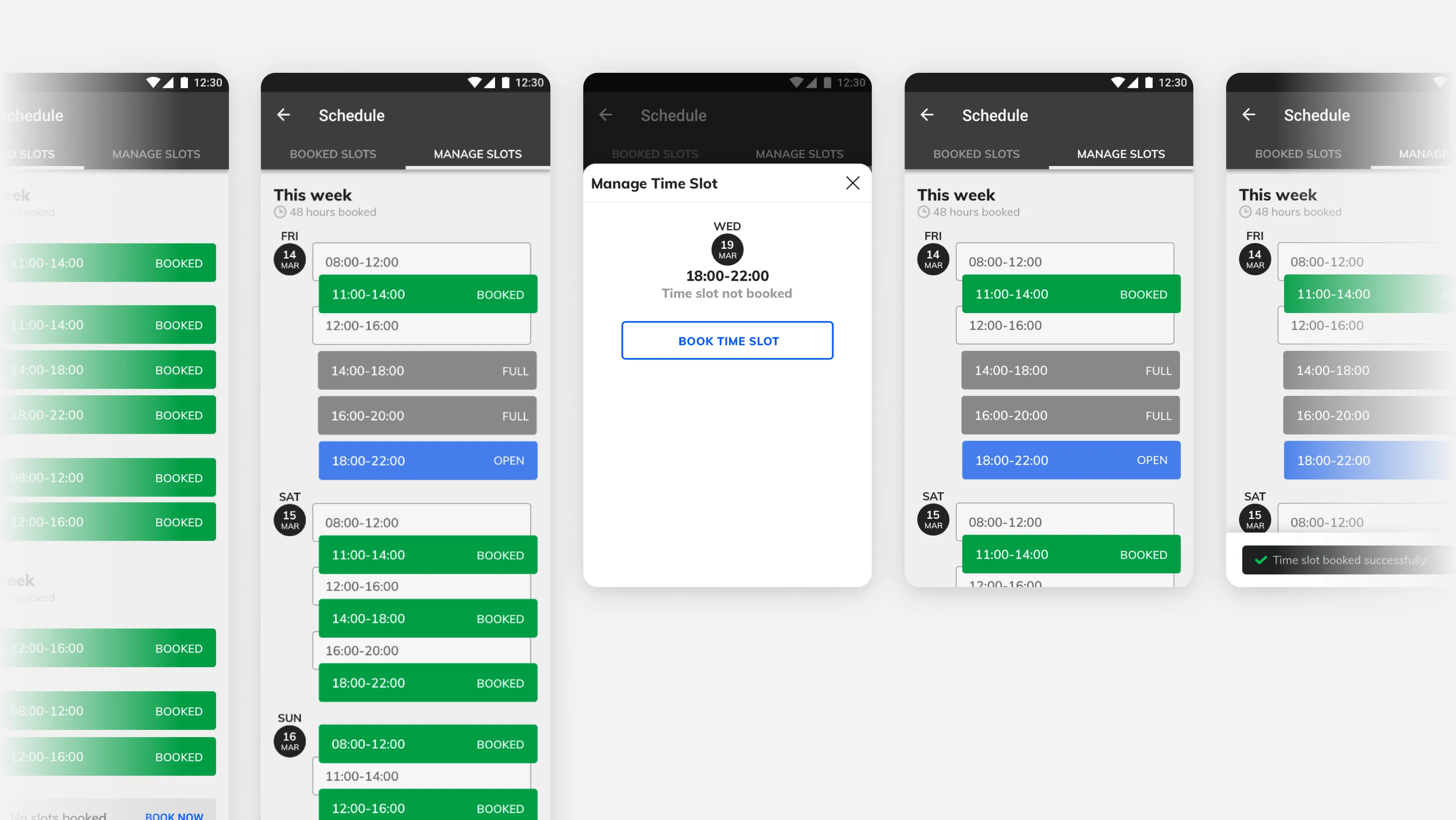
The redesigned system introduced a simple and intuitive shift booking experience.
Drivers can immediately see:
Colour coding makes status easy to understand.
Drivers can:
This significantly reduces friction during scheduling.
Drivers can see:
Helping them plan their work week more effectively.
Testing process
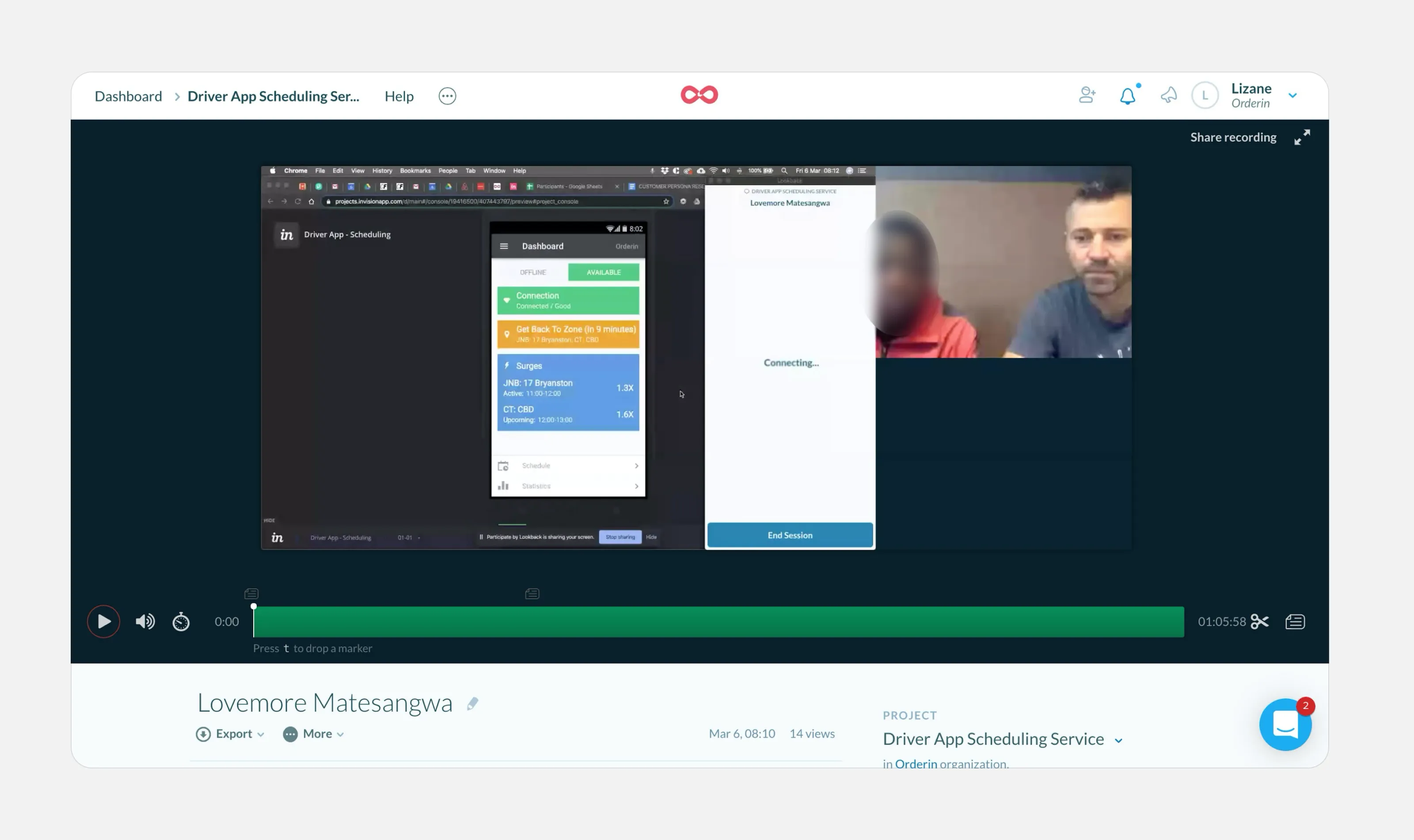
I tested the prototype with 6 drivers in one day, recording screen activity, audio, and video.
Insights from testing informed the final refinements.
The shift booking system enabled Orderin to better control driver supply and improve scheduling transparency.
The feature remains in use today through Orderin’s partnerships with Pick n Pay and McDonald’s, demonstrating the long-term value of the solution.
This project directly connected UX improvements with operational efficiency.
Quick guerrilla testing exposed major problems in the beta prototype.
Small changes in terminology significantly improved comprehension.

Getmo is built for SaaS, marketing teams and growing busineses that need consistent, ongoing, senior-level design support without the hiring and agency headaches.


Getmo is a subscription-based design and Webflow service that gives startups, marketing agencies and SaaS teams unlimited design requests, fast turnarounds, and predictable monthly pricing — all handled by a senior designer at Getmo.
You subscribe using PayPal, submit design requests in our client portal, and we work through them one by one. You can pause or cancel anytime, so you only pay when you need Getmo.
Fast-moving startups, SaaS companies, marketing teams and small teams that need consistent, high-quality design work without the cost or overhead of hiring in-house designers or traditional agencies.
Getting started is fast and straightforward. First, we’ll walk you through a short demo so you can see exactly how our workflow and client portal operate. We'll also assess whether our services would be appropriate for your needs. If you’re ready to move forward, simply subscribe via PayPal. From there, we’ll onboard your team into the Getmo client portal. Once you’re set up, you can immediately start submitting design requests — and you’ll begin receiving your first design artefacts and responses within 48-72 hours.
Getmo is fast, flexible, and predictable. No contracts, no hourly rates, no limits on requests or revisions. Just a dedicated to delivering quality work at startup speed.
Yes — Getmo thoughtfully integrates AI tools to enhance efficiency while maintaining the highest design standards. Technologies like Figma’s Make, ChatGPT, and Claude help accelerate early exploration, content drafting, and initial concept development.
However, every final deliverable is crafted, refined, and quality-checked by a human. AI supports the process — the expertise, judgment, and creative direction always come from seasoned professionals.
Getmo covers a wide range of creative and web work — including UI/UX design, App design, Webflow development, brand identity, illustrations, pitch decks, marketing design, and social media creatives. If it’s design-related, we can handle it.
We work in Figma for UI and web design, Webflow for development, and Photoshop/Illustrator for branding and graphic work. We also use AI tools to streamline workflows and speed up delivery.
Unlimited. Add as many requests as you want to your queue. Getmo completes them one at a time with fast turnaround.
Yes, unlimited revisions. Getmo keeps iterating until you’re 100% happy.
Getmo currently design and develop Webflow websites only — from simple landing pages to full multi-page sites. Just submit your requirements through the client portal and we’ll take it from there. We’re also working toward adding support for Framer and custom web development in the future.
Most tasks are delivered within 48–72 hours. Bigger or more complex projects may take longer, but we’ll always communicate timelines upfront.
You’ll use Getmo's simple client portal to submit tasks, upload assets, give feedback, and communicate directly with the founder and designer of Getmo.
Absolutely. You’ll work directly with the founder of Getmo on every project.
I intentionally keep the studio boutique so I can stay deeply involved in each client engagement. That means consistent quality, clear communication, and a strong understanding of your product over time.
For specialized development beyond Webflow, I collaborate with trusted partners when required — but I remain your single point of contact throughout.
No problem — we revise until it’s right. That’s the core benefit of our unlimited revision model.
We offer a flat monthly fee. No hidden charges, no billing surprises, no extra costs for revisions or bigger tasks. See our pricing page for details
Yes — anytime. If you don’t need design work for a week or month, pause your subscription so you’re not paying for idle time.
No. Month-to-month, cancel anytime.
Yes, to some extent. If you're not happy with our service in the first two weeks, we'll refund you 75% of the monthly subscription fee. An example, if your subscription costs $3,900, we'll refund you $2,925.